
Dark Sky Initiatives
Have you taken a moment lately to look up and admire the starry night sky in our township? Our dark skies are a beautiful part of the place we call home, and we all have a role to play in preserving them. Through responsible lighting practices on our properties, we can reduce unnecessary artificial light and help protect this natural beauty for everyone to enjoy.
What is Light Pollution?
Light pollution occurs when artificial light shines where it is not needed or escapes upward into the night sky.
Excessive or poorly directed lighting can create glare, reduce visibility, affect wildlife, and diminish our ability to enjoy natural dark skies.
Types of Light Pollution
Skyglow: The brightening of the night sky caused by artificial lighting.
Glare: Excessively bright lighting that reduces visibility and creates discomfort.
Light Trespass: Light that spills into neighbouring properties or areas where it is not needed.
Clutter: Groups of bright lights that create unnecessary nighttime brightness.
Why It Matters
Artificial light affects more than just our view of the stars. Light pollution can disrupt wildlife, impact ecosystems, and interfere with natural human sleep cycles.

Preserve Starry Skies
Responsible outdoor lighting helps preserve the beauty of our natural night skies so future generations can continue to enjoy star-filled evenings.

Wildlife Disruption
Nocturnal animals rely on darkness, and light pollution can disturb their natural behaviours and habitats.

Insect Decline
Many insects are fatally attracted to artificial light. Their loss affects species that rely on them for food and pollination.

Human Health
Humans have evolved with natural light cycles, and bright nights can interfere with sleep and overall well-being.

Energy Savings
Using less light, timers, and motion sensors can reduce energy use, lower costs, and help decrease our environmental footprint.
Ways You Can Help
Simple changes to outdoor lighting can help reduce light pollution and preserve Greater Madawaska’s natural night skies.

Use Lights Only When Necessary
Turn off lights when they are not needed. Motion sensors, timers, and smart lighting can help reduce unnecessary light.

Give Every Light a Purpose
Before installing outdoor lighting, consider how it impacts neighbours, wildlife, and the surrounding environment.

Direct Light Downward
Use shielded fixtures that direct light downward where it is needed. This helps reduce glare and prevents unnecessary light from shining into the night sky and neighbouring properties.

Reduce Brightness
Use dimmers and lower brightness levels whenever possible to reduce glare and light pollution.

Use Warm-Coloured Bulbs
Use outdoor lighting that is no more than 2700 kelvins to create softer, warmer light that is less disruptive to wildlife, insects, and natural night skies. Yellow “bug lights” are another good low-impact option.
Recommended Outdoor Lighting Fixtures
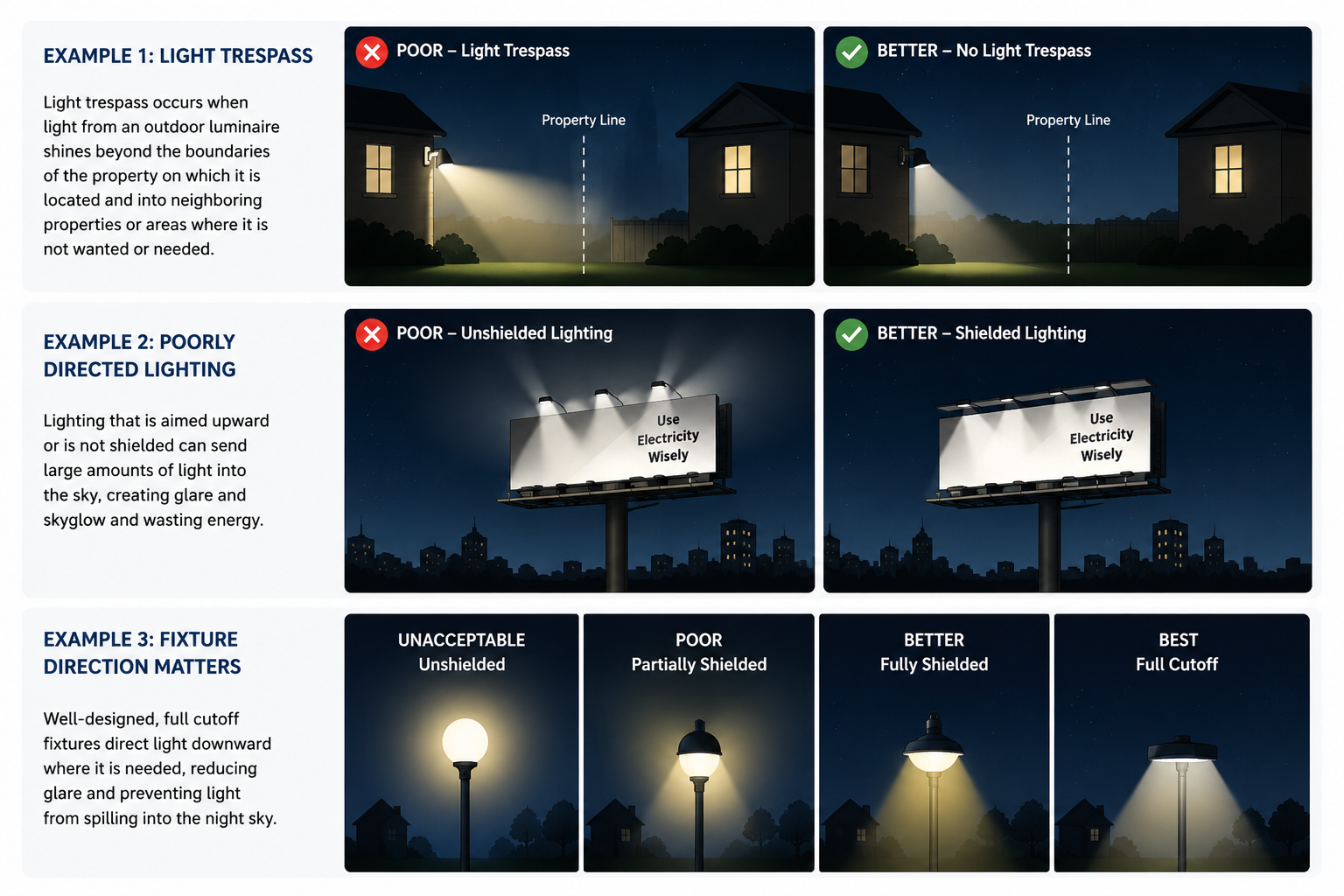
Choosing the right outdoor lighting fixtures can help reduce glare, minimize light pollution, and improve nighttime visibility. Some light fixtures can create disruptive lighting conditions rather than supplying non-intrusive and effective lighting.
Light Trespass occurs when light from an outdoor light fixture shines beyond the boundary of a property and into a neighbour's yard or other areas where the light is not needed. Fixtures that are shielded and pointed downwards can help alleviate this issue.
Lighting that is aimed upward or not shielded can send large amounts of light into the sky, creating glare and skyglow, and potentially wastes energy.
Well-designed, full cutoff fixtures direct light downward where it is needed, reducing glare and preventing light from spilling into the night sky.
Dark Sky Preserves & Additional Resources
Dark Sky Preserves are protected areas that make a special commitment to protecting and preserving the night by reducing or eliminating light pollution.
Many plants, wildlife, and insects rely on darkness to forage, breed, and navigate. Protecting dark skies not only creates beautiful nighttime experiences, but also helps protect ecosystems.
Learn more about dark sky protection, responsible outdoor lighting, and designated dark sky preserves across Ontario and Canada.
Ontario Dark Sky Preserves
Point Pelee National Park
Canada’s first national urban dark sky preserve, known for exceptional birding and nighttime viewing opportunities.
https://parks.canada.ca/pn-np/on/pelee/activ/sky-ciel
Bruce Peninsula National Park
Recognized for its protected night skies and outstanding stargazing experiences along the Niagara Escarpment.
https://parks.canada.ca/pn-np/on/bruce
Fathom Five National Marine Park
A designated dark sky destination offering exceptional nighttime viewing above and below the water.
https://parks.canada.ca/amnc-nmca/on/fathomfive
Additional Resources
DarkSky International
An organization dedicated to reducing light pollution and protecting natural night skies through education, advocacy, and responsible lighting practices.
https://darksky.org
Royal Astronomical Society of Canada — Dark Sky Sites Learn more about Dark-Sky Preserves, Urban Star Parks, and Nocturnal Preserves across Canada.
https://www.rasc.ca/lpa/dark-sky-sites
Sign Up to Stay Up to Date!
Receive important news including Emergency announcements and stay up to date on events, programs and operations by signing up.


